Amy Hoy with Alex Hillman
Just Fucking Ship
Note: Don’t like cursing? I hear ya. When you buy JFS, you’ll also get the bleeped version for free. I just haven’t set up the tailored bleeped landing page yet.
Whenever you look around, you know what you should be doing: creating and launching and selling a product, bootstrapping a business on the side.
You’re smart. You’re capable. You’ve got the skills to make stuff.
You can see the kinds of results others are creating for themselves. You want those results, too.
The path forward seems both natural and in reach:
- Step one: start a side project
- Step two: …finish that side project
- Step three: actually SHIP that side project
- Step four: get that project in the hands of people who want it, value it, and are happy to pay you for it.
But when you try it, you get stuck. You stall. “I’ll finish this later” leads to “It’s just not quite ready yet” to “you know, I don’t really feel like working on this anymore.”
What’s stopping you? You get things done in your job… why can’t you just make this happen?
The good first bit of good news is there IS a reason. You’re trying to use your old ways of working – the ones you learned in school and while working for bosses at jobs – to get a different kind of work done.
Shipping a product might appear similar to the work you’ve done before, but it’s actually the complete opposite. Your old ways of working might have gotten you grades and praise and promotions in the past…
But it won’t work now, not for this.
There’s good news, though: You can learn the NEW skills and habits and techniques you need to achieve what you want.
I learned them. Alex learned them. We’ve successfully taught them to the several hundred students who have taken our courses on bootstrapping products. Students who’ve gone from doing & shipping nothing — always waiting for an authority figure to poke & prod them to do the work — to self-powered juggernauts with growing audiences. They have workshops, ebooks, and other products for sale. They have marketing plans, customers, and businesses making money. They have freedom.
Now we want to help you, so you can use them to create whatever it is you want – whether you want to take 30×500 or not, whether your side project is a hobby or a business. Whether that side project is a book, an app, an open source project, actually write on your blog, teach a class, learn something new, get a better job… the rules are the same.
We’ll teach you 21 principles for getting off your butt and finally shipping.
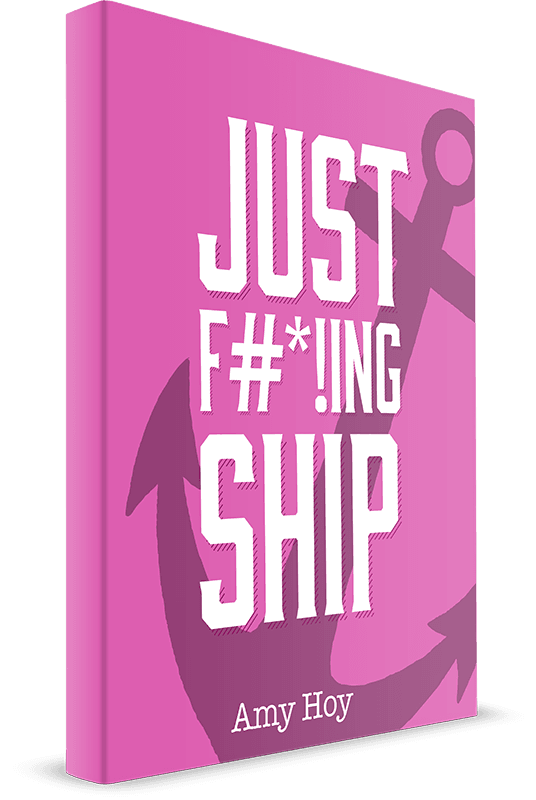
Premium Package
Buy now for $39! |
Just the book!
Buy now for $19! |
|
The 21 Principles to Just Fucking Ship
Also, BONUS chapters including:
We used this book to write and fucking ship this book in 24 hours.Okay, maybe that’s not perfectly precise, but we used 100% of the lessons IN this book to write this book during Nathan Barry’s 24 Hour Product Challenge. See, even WE get stuck sometimes. We intended to write and ship this book MONTHS ago. In fact, the first version of this page was created on January 30th of 2014. So when Nathan issued his challenge, I stepped up. A few hours later, Alex (who was busily kicking things off with our new 30×500 alumni-only community) came on board so we could work in parallel. Just 15 minutes past the 24 hour deadline, we shipped. Perfect? No. Complete? Not exactly, we have a few chapters to finish, this landing page, and a half-dozen other small-but-not-critical things. So…was it shippable? You fucking bet. You can read a play-by-play of the 24.25 hours of production here, and even take a peek at my diligent time-logs here thanks to the magical productivity superpowers of my app, Noko Time Tracking. |
About the authorsSince 2010, we have taught nearly 1000 students from around the world how to build and launch a product busines. In the last 2 years alone, our students have collectively earned over $2 Million. We keep our skills sharp and practice what we preach. 
Your author
Amy HoyAmy quit her last (very cushy) job in 2007, opened up a consultancy for Fortune 100 companies, and then threw that all out the window to start a product biz after procrastinating for years. Noko has earned over $1.6MM in it's lifetime, and her tech ebooks & workshops have earned >$200k. Her hard-earned lessons in bootstrapping - delivered with her trademark bullshit-free honesty - has helped countless people get off their butts and ship. 
Your co-author
Alex HillmanAlex founded Indy Hall in 2006 while he was still a freelance web developer, and has grown it into one of the world's first, and longest running coworking spaces. Since, he's midwifed many products and businesses including his most recent, a discussion list for tight-knit communities called GroupBuzz. Many credit Alex with their starts, citing his non-nonsense credo "JFDI" (just effing do it) as a source of inspiration to stop with the excuses and, well, JFDI. |
Premium Package
Buy now for $39! |
Just the book!
Buy now for $19! |
"JFS was instrumental in giving me the know-how and the courage to build and ship something bigger than I had been willing to dream about doing before.”
–Philip Morgan, philipmorganconsulting.com
"Just Fucking Ship is the first book I've read that explains not only what you need to do to ship a product but also why it's important.”
–Frank Mitchell, frankmitchell.org